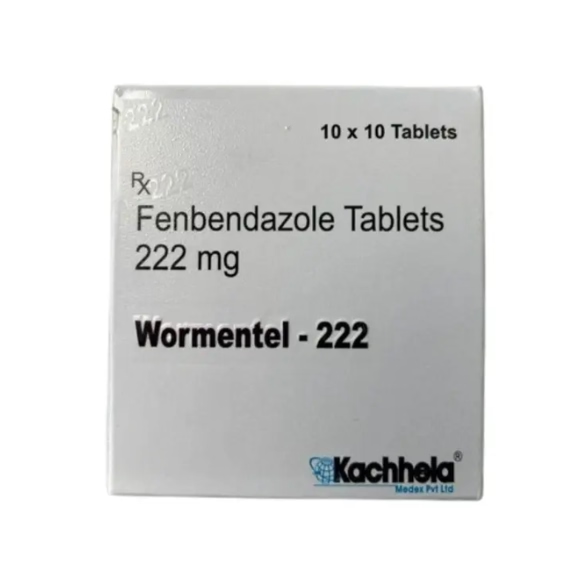
| Active Ingredient (Generic Name) | Fenbendazole |
| Indication | Treat a variety of parasites |
| Manufacturer | Kachhela Medex India Pvt Ltd |
| Packaging | 10 Tablets in 1 Strip |
| Strength | 222 mg |
| Delivery Time | 12 To 15 days |
Parasites are a common health concern for animals, especially pets such as dogs and cats. These parasites can enter the body through contaminated food, soil, water, or contact with infected animals. Once inside the digestive system, parasites begin feeding on the nutrients of the host animal, which can lead to various health problems.
To treat these infections, veterinarians often prescribe medications known as anthelmintics, which are designed to eliminate parasitic worms from the body. One such widely used medicine is Fenbendazole.
Fenbendazole 222 is a veterinary medication used to treat intestinal worm infections in animals. It contains fenbendazole as the active ingredient and belongs to a group of drugs known as benzimidazole anthelmintics. These medicines are commonly used in veterinary care to eliminate parasites that affect pets and livestock.
Fenbendazole works by disrupting the parasite’s ability to absorb nutrients, which eventually causes the parasite to weaken and die. Because of its effectiveness and relatively low toxicity, fenbendazole has become one of the most trusted treatments for parasite control in animals.
This guide explains what Fenbendazole 222 is, how it works, the parasites it treats, dosage guidelines, safety precautions, and frequently asked questions.
What Is Fenbendazole 222?
Fenbendazole 222 is an antiparasitic veterinary medicine designed to treat worm infections in animals. The medicine contains fenbendazole, a compound that has been used for decades to control parasitic infections in pets and livestock.
Parasitic worms can live inside the digestive system of animals and compete for nutrients. Over time, these infections may lead to symptoms such as weight loss, digestive problems, weakness, and poor coat condition.
Fenbendazole helps eliminate these parasites by blocking their ability to use glucose. Since glucose is essential for parasite survival, this disruption eventually leads to the death of the parasites.
Once the parasites die, the animal’s body naturally eliminates them through the digestive system.
Types of Parasites Treated with Fenbendazole 222
Fenbendazole is considered a broad-spectrum dewormer, meaning it can treat several types of intestinal worms.
Roundworms
Roundworms are one of the most common intestinal parasites found in dogs and cats. These worms live in the digestive tract and feed on nutrients from the host animal.
Animals infected with roundworms may show symptoms such as:
- bloated abdomen
- vomiting
- diarrhea
- weight loss
Fenbendazole is frequently used to treat roundworm infections in pets.
Hookworms
Hookworms attach to the intestinal lining and feed on the animal’s blood. This can cause anemia, weakness, and digestive problems.
Fenbendazole helps eliminate hookworms and prevents further damage to the intestinal lining.
Whipworms
Whipworms infect the large intestine and may cause chronic digestive issues.
Symptoms of whipworm infection may include:
- persistent diarrhea
- dehydration
- weight loss
Fenbendazole is commonly prescribed by veterinarians for whipworm treatment in dogs.
Certain Tapeworms
Although fenbendazole does not treat every species of tapeworm, it may be effective against certain types depending on the parasite involved.
Veterinarians often identify the specific parasite through diagnostic testing before recommending treatment.
How Fenbendazole 222 Works
Fenbendazole works by interfering with the metabolic processes of parasites.
Parasites rely on glucose to generate energy. Fenbendazole prevents the parasites from absorbing and utilizing glucose, which disrupts their energy supply.
As a result:
- the parasite loses energy
- growth and reproduction stop
- the parasite gradually dies
After the parasite dies, the animal’s digestive system removes it naturally.
Because fenbendazole targets parasite metabolism rather than animal cells, it is generally considered safe when used at the correct dosage.
Animals That May Use Fenbendazole 222
Fenbendazole is commonly used in veterinary medicine to treat parasites in several types of animals.
These include:
- dogs
- cats
- horses
- cattle
- goats
- sheep
Each animal species requires a different dosage based on body weight and the type of parasite infection.
For pets such as dogs, fenbendazole is often used as part of routine parasite control programs.
Signs of Worm Infection in Animals
Pet owners should watch for symptoms that may indicate a worm infection.
Some common signs include:
- diarrhea
- vomiting
- weight loss
- dull coat
- low energy
- swollen abdomen
In some cases, worms may be visible in the animal’s stool.
If these symptoms appear, it is important to consult a veterinarian for diagnosis and treatment.
Recommended Dosage of Fenbendazole 222
The correct dosage of fenbendazole depends on several factors.
Veterinarians usually consider:
- the animal’s body weight
- age of the animal
- type of parasite infection
- overall health condition
Fenbendazole is typically administered for several consecutive days depending on the parasite being treated.
Completing the full course of treatment is important to ensure that all parasites are eliminated.
How Fenbendazole Is Administered
Fenbendazole may be available in different forms such as:
- tablets
- powder or granules
- liquid suspension
The medicine is often mixed with the animal’s food to make it easier to administer.
If the animal refuses medication, a veterinarian may recommend alternative methods for giving the dose.
Possible Side Effects
Fenbendazole is generally considered safe for animals when used correctly.
However, some animals may experience mild side effects such as:
- temporary diarrhea
- vomiting
- reduced appetite
These symptoms are usually mild and resolve once treatment is completed.
Serious side effects are rare but should be reported to a veterinarian immediately.
Safety Precautions
Before using fenbendazole, certain precautions should be considered.
Consult a Veterinarian
A veterinarian should confirm the parasite infection before starting treatment.
Use the Correct Dosage
Proper dosing based on the animal’s body weight ensures effective treatment.
Monitor the Animal
Pet owners should observe the animal during treatment and report any unusual symptoms.
Preventing Worm Infections in Pets
Preventing parasite infections is an important part of responsible pet care.
Some useful preventive measures include:
- regular deworming schedules
- keeping the pet’s living area clean
- preventing pets from eating contaminated food or feces
- routine veterinary checkups
These steps can significantly reduce the risk of parasite infections.
Importance of Routine Deworming
Young animals are particularly vulnerable to parasitic infections because their immune systems are still developing.
Regular deworming helps protect pets from parasites and supports healthy growth and development.
Veterinarians often recommend routine parasite control programs for pets.
Conclusion
Fenbendazole 222 is a widely used veterinary medication designed to treat intestinal worm infections in animals. By blocking the parasite’s ability to absorb nutrients, the medicine effectively eliminates worms from the digestive system.
When used according to veterinary guidance, fenbendazole can help control multiple types of parasites and improve the health of pets and livestock.
Proper diagnosis, correct dosage, and regular veterinary care are important for ensuring safe and effective treatment.
Routine parasite prevention also plays a key role in maintaining the long-term health of animals.
FAQs
What is Fenbendazole 222 used for?
Fenbendazole 222 is used to treat intestinal worm infections in animals such as dogs, cats, and livestock.
What worms does fenbendazole treat?
Fenbendazole treats parasites including roundworms, hookworms, whipworms, and certain tapeworms.
Is fenbendazole safe for dogs?
Fenbendazole is generally safe for dogs when used at the dosage recommended by a veterinarian.
How long does fenbendazole take to work?
Fenbendazole begins affecting parasites within hours, but complete elimination may take several days.
Can fenbendazole be used for puppies?
Fenbendazole may be used for puppies under veterinary supervision to treat intestinal worms.
Can fenbendazole prevent worms?
Fenbendazole mainly treats existing infections, but regular deworming helps prevent future infestations.
What are the side effects of fenbendazole in dogs?
Possible side effects include mild diarrhea, vomiting, or temporary loss of appetite.
Do I need a veterinarian before using fenbendazole?
Yes, a veterinarian should confirm the parasite infection and recommend the correct dosage.
Fenbendazole 150 – Fenbendazole 222 – Fenbendazole 444 – Fenbendazole 500